۱۳۹۲ آبان ۱۸, شنبه

US Secretary of State John Kerry has warned the Israeli regime of ‘a third intifada’ if the US-backed Palestinian-Israeli talks end in failure


“The alternative to getting back to the talks is the potential of chaos,” Kerry said in an interview with Israel’s Channel 2 on Thursday. “I mean, does Israel want a third intifada?” he asked.

Palestinians twice rose up against the Israeli occupiers in their intifadas - December 1987 and September 2000. A total of 6,200 Palestinians were killed in the two uprisings.

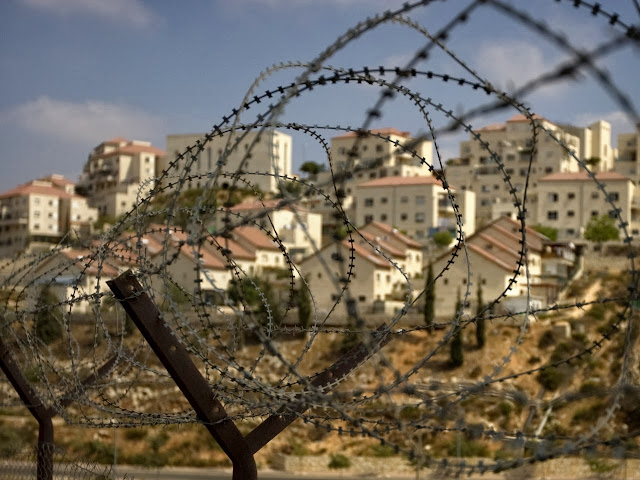
The negotiations between the Palestinian Authority and Israelis broke down on November 6 amid a dispute over the Tel Aviv regime’s decision to push ahead with the construction of over 3,700 new illegal settler units in the occupied Palestinian territories.
Kerry also stated, “The Palestinians knew that Israel would make some announcements. They knew it, but they don’t agree with it, and they don’t support it.”

The US official also met with acting Palestinian Authority Chief Mahmoud Abbas in the occupied West Bank on November 6, where he described Israel’s illegal settlement expansion as “illegitimate.”

“I want to make it extremely clear that at no time did the Palestinians in any way agree, as a matter of going back to the talks, that they could somehow condone or accept the settlements,” Kerry told Abbas.

The previous round of Palestinian-Israeli talks broke down in September 2010, after the Tel Aviv regime refused to freeze its settlement activities in the occupied West Bank. 

moghavemat has conducted an interview with Gareth Porter, a historian and investigative journalist from Washington D.C. to further discuss the ongoing talks between Iran and P5+1 countries over the country’s peaceful nuclear energy program

moghavemat:Gareth Porter here we have what seems to be an agreement that ... , well according to our correspondent there (in Geneva), there was an agreement that has been drawn up and right now there is a trilateral between the Secretary of State John Kerry and of course EU’s Catherin Ashton and Iran’s foreign minister.

What is your reaction regarding these talks and the point that it has reached?

Porter: Well, I think what this present point in the talks represents, is a very interesting throwback, in some ways, to the negotiating strategy that Iran used in the 2003 to 2005 period, which was to bargain, in order to get recognition of its right to enrich as the primary principle involved in return for a temporary suspension of some enrichment activities or all enrichment activities at different times during that period and what I see from the United States side here, is an attempt to spin what the Iranians have proposed.

This is clearly an Iranian framework for an agreement, there has been no ambiguity about that from the beginning of this process and I think that the United States is now spinning this as a freeze of ... , presenting it as a matter of, sort of, preventing Iran from moving forward with its nuclear program and some of the details are being fussed over or are being played down by the United States, I think, primarily the fact that this, as I understand the Iranian proposal, this will allow the Iranians to continue to enrich uranium, but that any enriched uranium will have to be immediately put into a stream that results in its being transformed into fuel rods and thus being unavailable for any higher-level enrichment and I think that that is, again, a throwback from 2002, 2003, 2005 when the Iranians made a similar proposal to the European three foreign ministers, UK, Germany and France, and at that point of course the Europeans were not interested because the United States refused to do it.

But I think what we are seeing here is a very interesting replay, in some ways, of what the Iranians were proposing ten years ago and I think the United States is now interested in this for their own reasons.

moghavemat: We talked about this rejection Gareth Porter and I quite distinctly remember what happened. It was roughly in 2004, especially when George Bush Junior came out and cited Iran as being part of the Axis of Evil; it really was a slap in the face to Iran.

What is there to say that the US want do that if an agreement is reached, which some are saying that it may, going on down the road; why should Iran continue trusting the US? They have said that these sanctions are reversible!

Porter: Just to clarify, I mean what happened in March 2005, was when the Iranians proposed this very interesting concept of, basically, guaranteeing that any enriched Uranium would immediately be transformed into fuel rods and that is when the Europeans were uninterested.

I think that the situation is fundamentally different politically in the United States in the following sense that the Bush administration was really not interested in diplomacy at all. I mean that was simply antithetical to their idea of what they wanted to do on Iran. I mean they were essentially aiming at regime change and they did not want any agreements that would interfere with the policy of keeping the path to regime change open.

So, this obviously, I think, is quite different now in terms of US policy. Regime change no longer appears to be a realistic objective and I think that the Obama administration certainly recognizes that.

So, they are, in fact, motivated to try to get an agreement of some kind if they do not have to give up too much.
At the same time, I must say that I do believe that there will be a problem when we come down to the next phase of the talks when the United States wants to use its leverage in the form of the very strong, very biting sanctions on the Iranian oil export sector to try to get far more of a sort of concessions or anything the Iranians will be interested in giving up, or alternatively the United States will try to get an agreement that will simply not give up entirely the sanctions.

So, I think that is where the bite is going to be. It is really still the sanctions problem that prevent, if there is something that prevents agreement, that is going to be that.

moghavemat: Do you agree with that (Stewart Stogel’s comments) Gareth Porter?

Porter: Well, yes I think that that is correct that the main reason that the Obama administration is trying to get some kind of an agreement, is the pressure that the Iranian nuclear program’s progress has placed on the US policy and the US diplomacy.

And I must say that this is a very, very long time strategy that Iran has been using and it goes back to the early [President] Khatami regime when they were first talking about enriching Uranium, when they first had the promise of that capability they viewed that, in large part, as a way of leveraging US diplomacy to get the United States to agree to remove sanctions.

Remember that at that point in 1990’s, the Khatami regime was under the umbrella of former President Rafsanjani, who was, of course, identified with that faction in Iranian politics which wanted to reach accommodation with the West in general and with the United States in particular for economic reasons, primarily because the aim was to integrate Iran’s economy into the global economy.

This was not a popular view outside that circle of leaders in Iran; it is still very controversial in Iran, but that was the idea to a great extent that motivated Iran to push its enrichment program forward and to, basically accumulate negotiation chips. This is something that has been sadly not understood in the West and particularly the United States for many years but this has been an essential aspect of the Iranian nuclear negotiating position and indeed of their nuclear program.
moghavemat: Gareth Porter, we are looking at many who are concluding and have concluded for quite some time that this, really is about politics, it is not so much the nuclear issue, diplomacy, the Wall Street Journal saying diplomacy with Iran looks promising, but the politics remain tricky.

What could be the other reasons that this nuclear program with Iran is something that is not at the heart, but rather on the side and there are other external issues involved.

Are the regional countries perhaps that could be discussed during these meetings? We could talk about Afghanistan or Syria perhaps, maybe you can give us a clear idea here.

Porter:
Well, I think that that other country is quite clearly Israel, that has been a political factor in US-Iran policy really for the last 20 years. Ever since the early to mid-1990’s, the United States has been adjusting its Iran policy to, basically coincide more or less with that of Israel. There has been a very conscious effort to align that policy with the Israeli policy both under Labor and Likud governments and that factor is still in play, there is no doubt about that.

I think that it is not necessarily strong enough to prevent an agreement, but it is definitely strong enough to cause problems with the United States’ position when it comes to the sanctions.

Remember that the sanctions are a product of not just the administration, the executive branch of the United States, but primarily of the Congress and the Congress has been, as I have often talked about in the past, Congress has been influenced extremely, heavily by the pro-Israeli lobby’s money that goes into the campaigns of members of the Senate and the House.

So, that is definitely a political factor that hovers over these talks, that has hovered over the US policy for many years, but I would also say that there has been a bureaucratic interest factor for many years, which is that there is a very powerful interest on the part of both the CIA and the military, the Pentagon, in having Iran as an adversary and pointing to what they regard as ... , what they have treated as the nuclear threat, the threat of the Iranian nuclear weapon because it justifies a lot of programs both in the intelligence community and in the Pentagon.

So, that is by no means a small factor in the history of this policy which by the way I have been documenting for a book that is about to be published early next year.
moghavemat: Very well, what is the name of the book?

Porter: It is going to be called: Manufactured Crisis; the untold story of the Iranian nuclear scare.
moghavemat: Gareth Porter, why did you choose that title for your book?

Porter: Well, the title reflects the process that I found in my research going back to, particularly, the 2002, 2003, period and then bringing the analysis forward to the present.
What I found was a very conscious effort by the Bush administration and Israel to create this narrative, if you will, of a secret Iranian nuclear weapons program and that narrative included, of course, at one point from 2004 on, the idea that there was a cache of documents, intelligence documents ... , from a laptop computer in Iran. The computer supposedly belonged to somebody who had been part of this secret program and then was secretly out of the country and brought to a consulate or embassy in Turkey and then fell into the hands of the US government.

What I was able to ascertain fairly early on, was that these documents were really a fabrication by Israel.

If you look carefully, you can see a series of indicators that the material in the documents actually conflicts with the documented facts, dates and so forth.

So, that became the centerpiece of what I called the manufactured crisis. The idea that Iran was secretly working on nuclear weapons and it was continuing to do so, hiding this from Western intelligence. That has been playing out for several years now with the Israelis continuing to plan documents and getting their allies particularly in Europe, the French and the Germans and the UK to carry water for them to make the case that the United States’ intelligence community was wrong in its 2007 estimate, saying that Iran was no longer working on nuclear weapons.

So, that is part of the politics that I think form the process that we have seen over the last few years.

French Foreign Minister Laurent Fabius says Israel’s “concerns” must be taken into consideration in the course of the nuclear negotiations between Iran and six world powers


“It is necessary to take fully into account Israel’s security concerns and those of the region,” Fabius told France Inter radio in Geneva early on Saturday at the beginning of the third day of the talks.

The news comes amid Israel’s deep anger over the likelihood of an agreement between Iran and the six world powers in the course of the ongoing nuclear talks.

On Friday, Netanyahu “utterly” denounced a possible agreement in the course of the nuclear talks as “very, very bad.”

This is while Israel, which is the sole possessor of nuclear weapons in the Middle East with 200-400 warheads, has repeatedly threatened to launch a military strike against Iran over the country’s nuclear energy program.

Israel’s salvo of threats and accusations against Iran comes as the International Atomic Energy Agency (IAEA) has never found any proof during its numerous inspections of Iranian nuclear facilities to.

Fabius also noted that there is “no certainty” whether Iran and six major world powers will reach an agreement at the current stage of their nuclear negotiations.

“There is an initial draft that we do not accept ... I have no certainty that we can finish up” at this stage, he said.

The French foreign minister also said there were many questions that still needed to be settled.

The negotiations between Iran and the five permanent members of the UN Security Council - the United States, China, Russia, France and Britain- plus Germany over the Islamic Republic’s nuclear energy program began in Geneva, Switzerland, on Thursday. The US secretary of state and the foreign ministers of Britain, France and Germany joined the talks on Friday.

Iranian Foreign Minister Mohammad Javad Zarif, his US counterpart John Kerry and EU High Representative for Foreign Affairs and Security Policy Catherine Ashton held trilateral talks also on Friday in the Swiss city.

Iranian Deputy Foreign Minister Seyyed Abbas Araqchi, who is also a member of Iran’s nuclear negotiating team, described the meeting as “productive.”

He added that the talks, which are aimed at hammering out a draft deal on Tehran’s nuclear case, are set to continue on Saturday

۱۳۹۲ آبان ۱۶, پنجشنبه

Resistance only way to liberate Palestine: Franklin Lamb

What follows is an approximate transcription of the interview.
Sir, what are your perceptions of Kerry's visit, and how can the so-called peace process continue with the Israelis belligerent attitude, as it continues the settlement building and it continues with the demolition of Palestinian homes in occupied territories?

Lamb: Yes. Just one comment on Kerry’s mission. Eleven days he has got in the region and he is going to tough the job in a lot of brush fires to put out, of course the Saudi issue and the Syrian case but in the case of Palestine, it is clear that these peace talks are dead on arrival as has been the so-called peace process.

He is hoping that at least the Americans want to see him relevant in this but the fact to the matter is, isn’t it, that the Zionists want what it referred to as a Catholic genuine victory remembering the Roman Punic Wars against Carthage.

They want total control, total destruction, total humiliation. So I think that the chances of any happiness result wise is very unlikely but he has got other problems on this mission and that is the Saudis and it seems that in his language today and yesterday he is trying to link no daylight between the American and the Saudi position. You know, he commented on that they were saying the same goal in Syria i.e. regime change and the same that the Americans and Joe Biden always say about the Zionists, where there is no daylight. So it equals no daylight between the Saudis position, the Zionist position and the Americans.

So I think with that as backdrop to his current mission but no, there won’t be any progress. The only thing that is going to liberate Palestine and we all know it and they know it, is going to be resistance. That is the only option. And it is going to continue and it is going to have to increase.

And talking about the issue of settlement building, it is illegal internationally, the United States has also stated that it is illegal and it does not support the settlement buildings but why can’t they get the Israelis to stop the settlement constructions?

Lamb: I was in a lecture last week I think it was today with the UN representative, he was talking about the fact that the UNIFIL has had over a hundred and fifty meetings with the Zionists over the over flight and the violation of the sovereignty here.
The conclusion is they have no ear to listen. They operate in a different mindset, a different psychology, a different view of the world and they are placed in it so international law is meant to apply to other nations, you know, of the ninety seven members of the United Nations but not to them.

Israel was founded on lies. It kept lying, and kept expanding Today, its lies and expansionism threaten world peace


In the past, the USA has almost always gone along with Israel’s lies. But now there are signs that the American leadership, and the American people, may be waking up.

Yesterday, the American Secretary of State John Kerry clearly stated that the US, like the rest of the world, considers Israeli settlements illegal: “Let me emphasize at this point the position of the United States of America on the settlements is that we consider them... to be illegitimate.” Obviously Kerry and US leaders are not buying the ludicrous claims of the Likud Party, which has dominated Israeli politics since 1977, that all of historic Palestine belongs to the Zionists.

But Kerry and the rest of the US leadership are not really challenging the Zionist lies. They are not even insisting on a freeze on new settlements, much less demanding that the Zionists immediately withdraw from all lands they stole in the 1967 war of aggression. And the whole truth - that the entire Zionist occupation of Palestine is illegitimate - will never pass the lips of American leaders.

The US media, like the US government, is largely owned and occupied by agents of Israel. Normally it spins every story it touches in a pro-Israel direction. That is why it is so interesting that big American media have at least slightly deviated from the Zionist party line on three key issues: The Israeli-assisted coup d’état in Egypt, the war on Syria, and negotiations with Iran.

Gen. El-Sisi was Israel’s liaison to the Egyptian army prior to the coup that overthrew President Morsi last July. The coup was staged with massive Israeli support. Yet the Zionist-dominated US media, despite its affinity for Israel, has been offering relatively balanced reporting on the horrific situation in Egypt. The New York Times, in particular, has been fair-minded in its coverage, including recent stories on the kangaroo court staging what the Times called the “show trial” of President Morsi.

The Zionist-dominated US corporate media has also surprised many observers by its reluctance to propagandize enthusiastically for escalation of the US war on Syria. When Saudi intelligence, backed by the Israelis, staged the false flag chemical weapons attack in al-Ghouta last August, it seemed a foregone conclusion that the US would be dragged into yet another Mideast war for Israel. But the media provided only halfhearted, lukewarm war propaganda, even as AIPAC and the rest of the Israel lobby led the push for war. For once, the Zionists were defeated in Congress, thanks in large part to the media’s lack of enthusiasm in fanning the flames of war.

Another surprise has been the Zionist-dominated corporate media’s relative restraint in its reporting on recent negotiations with Iran. Since 1979, the US media could always be relied upon to produce mendacious and vitriolic anti-Iran propaganda on a regular basis. Just a few years ago, it was mistranslating statements by then-President Ahmadinejad and mischaracterizing the peaceful Iranian nuclear energy program.

Today, the US media is sending mixed messages about Iran. There is still a certain Zionist-derived anti-Iran slant to much of its coverage. But it has also provided a fair amount of relatively favorable reporting on the new Iranian administration, and is putting out less blatantly biased coverage of the nuclear negotiations.

An example of the new trend is a recent Associated Press (AP) article headlined “FACT CHECK: Israeli claims on Iran nuclear program.” The AP article “fact checks” seven Israeli claims about Iran’s nuclear energy program, and finds that six are either false, exaggerated, distorted, or deceptively taken out of context.

The AP article points out that while Netanyahu says Iran could produce a bomb “within weeks at most,” most experts agree that even if Iran did move to higher enrichment, which it has not, it would require several months, not just a few weeks, to produce a bomb. (Unfortunately, the AP article does not point out that Leader of the Islamic Revolution Ayatollah Seyyed Ali Khamenei has deemed nuclear weapons un-Islamic and declared them to be absolutely forbidden - which should put the whole issue to rest.)

The AP cites Netanyahu’s claim that Iran’s heavy water reactor in Arak, has “no connection with energy for peace, but only for nuclear weapons,” then points out that this claim is complete nonsense.

The article points out that Israel’s claim that Iran has “systematically defied the UN” is an exaggeration. Unfortunately, the AP does not choose to inform its readers that Israel has itself defied more UN resolutions than every other country on earth put together.

The AP cites Israel’s claim that Iran has 18,000 centrifuges, and points out that of these only 10,000 are active.

The article pokes holes in Israel’s claim that because Iran has an enrichment program it must want nuclear weapons, by pointing out that at least five countries have enrichment programs but have not built nuclear weapons.

The only Israeli claim that the AP verifies is that “sixteen countries have nuclear technology but do not enrich uranium.” But this claim means nothing, since many other countries do enrich uranium without building weapons - which is precisely what Iran wants to do.

The AP heaps subtle scorn on Netanyahu’s claim that Iran is “building these long-range intercontinental missiles to reach the United States.” The only basis for it, we learn, is that Iran has a space program - which has “raised concerns that the same technology could be used to develop an intercontinental arsenal.” By Netanyahu’s logic, any country with a space program must be planning to nuke the USA!

It is heartening to see John Kerry declaring Israeli settlements illegal, and the Associated Press exposing Netanyahu’s lies about the Iranian nuclear energy program. It is even more heartening to see the Anti-Defamation League (ADL) admitting that American anti-Israel groups are growing in numbers, power, and effectiveness. I recently interviewed Alison Weir of IfAmericansKnew.org, who was overjoyed to learn that her group had been attacked by the ADL as one of America’s most effective anti-Israel groups.

Will the American people and the American government get so fed up with Israeli lies that they eventually decide to end all support for the Zionist occupation of Palestine? It won’t happen this year, or next. But if current trends continue, the day of reckoning for Zionism may arrive sooner than anticipated

۱۳۹۲ آبان ۱۴, سه‌شنبه

Initially, Bashar al-Assad had developed his chemical weapons program as a deterrent against Israeli and Western aggression. Nevertheless, he has lately discovered that these arms are more of a liability than an asset, nearly preventing the very invasion they intended to make


For its part, Iran has been unyielding in their condemnation of the use and proliferation of weapons of mass destruction, given that they were obviously the victims of a heinous series of attacks at the hands of Saddam Hussein, with the tacit approval of his Western patrons. Few understand as profoundly as Iran how truly abominable these armaments are-the same impetus which drives the Europeans to abolish these weapons

And yet, in his recent speech at the U.N. General Assembly, Israeli Prime Minister Benjamin Netanyahu warned about Iran’s nuclear energy program. As part of this tirade, he compared North Korea with Iran in terms of both countries' nuclear programs.
Of course, the obvious flaw in Netanyahu’s “logic” is that Iran has no desire for nuclear armaments. Instead, Iran strives to transform into the economic and geopolitical superpower that it is destined to become once international sanctions are lifted. Moreover, the Iranians do not need nuclear weapons to achieve this end.


In defiance of the incredible campaign to keep Iran down through futile efforts which have been waged incessantly since 1979 and have continued to expand-Iran is already the world’s 17th largest economy (by purchasing parity power), trending towards 15th. Despite the strains international sanctions impose on its economy, Iran’s GDP (ranked 21st in the world) continues to grow. They are diversifying their economy in order to work around the extraordinary sanctions regime, and have been making extraordinary gains in science and technology. However, because Iran does not want to end up like Saudi Arabia, nuclear energy is a big part of this long-term vision.

The KSA has built its entire economy around oil, and they do not really have much else to offer. Accordingly, they do not have much of a future. As the oil from Libya and Iraq begins hitting the market in earnest, the price of crude will drop substantially. Moreover, as the United States ramps up its energy production and exports, becoming a net-exporter of petroleum, and as much of the world moves from fossil fuels into renewable-even if the sanctions remain in place on Iran, the Saudis are running on borrowed time. They will still be able to sell to emerging markets, particularly India and China, but at a much lower premium level.

Now, if Iran’s fossil fuels also go to the market-given that they possess more than 10% of the world’s proven oil reserves, 15% of its natural gas reserves, and 1.9 billion short tons of coal reserves-the price of fossil fuels will drop significantly. Simultaneously, these energy sources will likely be subject to a host of new environmental regulations aimed at limiting their use, or increasing their cost in an attempt to encourage developing nations to decrease their reliance. Accordingly, Iran’s future cannot be viably built around fossil fuels.

This is one of the major reasons Iran seeks nuclear power as a more sustainable, and likely more profitable, alternative means of energy production. This is also why Saudi Arabia is struggling so hard to keep Iran on the margins--an economically integrated Iran poses an existential threat to the Wahhabi Kingdom, already under immense and growing internal strains. The United States would be well-advised to extricate itself from this ill-fated ally. In the meantime, there should be no doubt that Iran’s nuclear ambitions are strictly peaceful.

Meanwhile, in August 2005, Ayatollah Khamenei declared a fatwa against the production, stockpiling, or use of nuclear weapons-pronouncing unequivocally that they are forbidden under Islam, and that the Islamic Republic of Iran would never acquire, let alone deploy, these weapons. This ruling is of paramount importance in the case of Iran.

Since if the religious authorities wield a lot of control over every facet of the state, as the West is fond of claiming, then the chances of Iran developing a nuclear weapon will virtually be non-existent as long as the Islamic jurisprudence, also known as Velayete Faqih, remains in place. In fact, as long as Iran’s citizens continue to defer to the religious leadership of Ayatollah Khamenei, they will continue to reject the production, stockpiling, or use of nuclear weapons indefinitely. The persistent paranoia among Western policymakers is based on their near-total ignorance of Shia Islam and their distrust of Muslims.

Nonetheless, President Rouhani is working to overcome these shortcomings of his interlocutors through increased transparency and a more congenial tone. The West should reciprocate by dropping its own “tough guy” posturing, and negotiate to resolve these longstanding issues directly and in good faith. They must ignore their toxic “allies” in Israel and Saudi Arabia, who seek to undermine Iran for a host of unfounded reasons. In fact, if the United States and the international community are truly so concerned with nuclear non-proliferation in the Middle East, their efforts would be better spent on Israel and Pakistan--both of whom are known to possess weapons of mass destruction, and both of whom act as radically destabilizing forces in the region. Iran has long been at the forefront of calling for cooperation towards this end.

God willing, the day may soon arrive when these calls fall on ears which are no longer deaf

The United States is planning to conduct more joint military exercises in western Pacific amid China’s concerns over the presence of American forces in the region


The US Navy and Marine Corps proposed to hold anti-submarine training and practice unit and mixed unit tactics with allies such as Japan while using real bullets and bombs, Stars and Stripes reported.

“The Navy is evolving, and we have new weapons platforms coming onboard,” John Van Name, a senior environmental planner for the US Pacific Fleet, said.

He added that anti-submarine exercises around the Mariana Islands aim to combat new types of ultra-quiet subs used by China and others.

The expansion of US military maneuvers is from 497,469-square-mile Mariana Islands Range Complex to a larger 984,601-square-mile study area, pushing operations much farther west toward the Philippines and Okinawa.

The air-to-ground bombing exercises could also double from 1,300 to 2,520 annually and gunnery exercises between ships could increase from 17 to 240 per year.

This is while the Chinese government has repeatedly voiced concern over Washington’s plans for boosting its military strength in Asia.

China says American militarism in the region could endanger peace. It also urged the US to abstain from flexing its muscles.

In August, the Foreign Policy magazine reported that the United States is encircling China with a chain of small air bases and military ports.

The US Air Force planned to lease 33 acres of land on the small Pacific island of Saipan for the next 50 years to build a "divert airfield" on an old World War II airbase there.

The Air Force specifically wants to expand the existing Saipan International Airport to carry out "periodic divert landings, joint military exercises, and joint and combined humanitarian assistance and disaster relief efforts," according to the documents.

Beijing is considering the Pentagon’s focus to “pivot” increased US military presence in the Asia-Pacific as a strategy to counter China’s increasing global influence.